

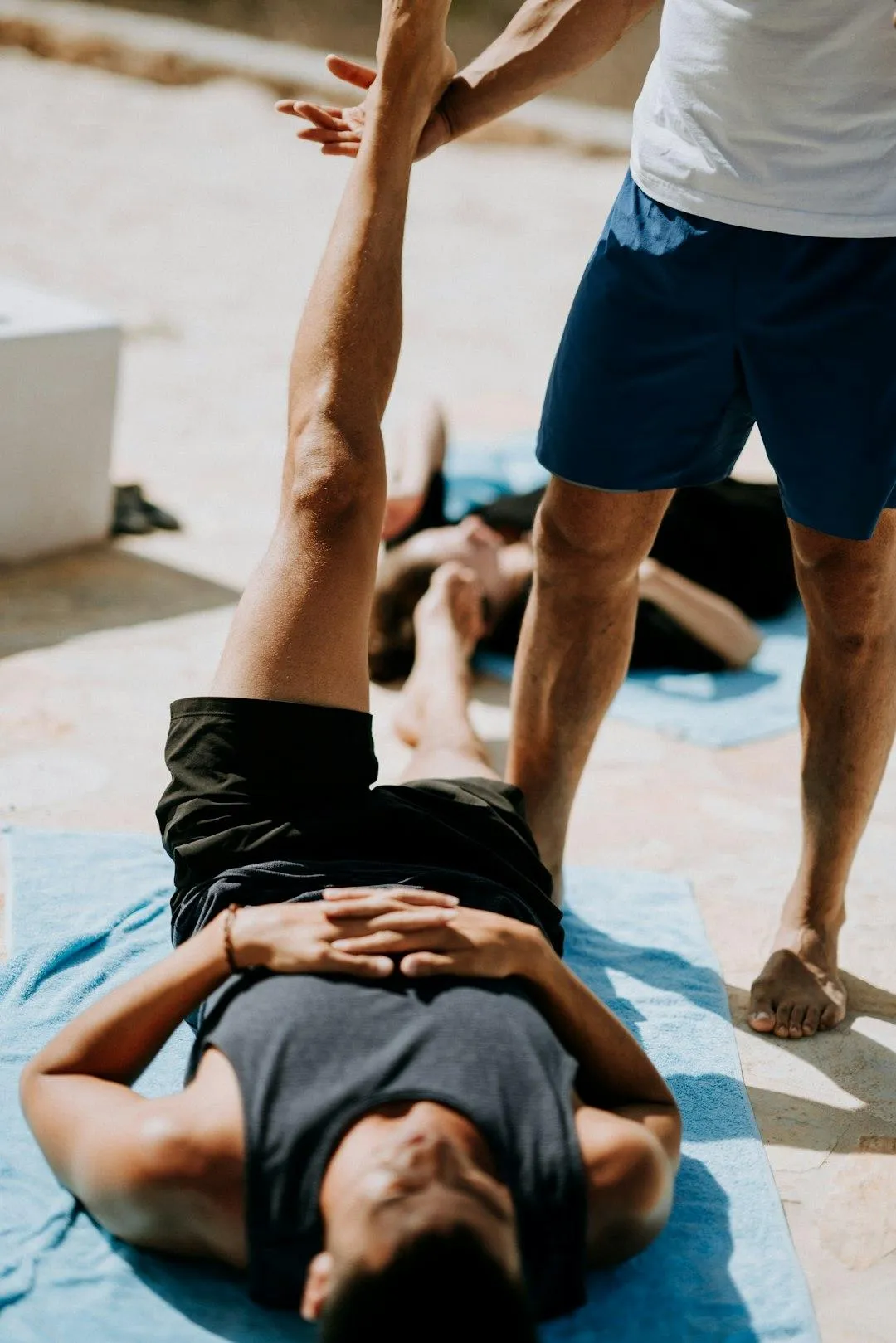
PNF Stretching
Release chronic tension patterns, restore natural mobility, and free your body from the stress it's been holding.
A neurological reset
for your muscular system.
Proprioceptive Neuromuscular Facilitation (PNF) is an advanced form of flexibility training that involves both the stretching and contracting of the targeted muscle group.
Unlike static stretching, PNF works directly with your nervous system's reflexes to safely override the body's natural stretch reflex, allowing for immediate and profound increases in range of motion while simultaneously releasing deep-seated chronic tension.
The Core Mechanisms
Contract-Relax
By actively contracting a muscle before stretching it, we trigger autogenic inhibition — a reflex that forces the muscle to relax deeper than it could through passive stretching alone.
Fascial Release
We don't just stretch muscles; we hydrate and mobilize the fascial web. This releases the "stuck" feeling that often accompanies chronic stress and poor posture.
Active Integration
Flexibility without strength is instability. PNF builds strength at the end ranges of your mobility, teaching your nervous system that it is safe to move freely.
Restore your body's
natural capacity.
- Immediate increases in functional mobility
- Release of chronic pain and stiffness
- Down-regulation of the nervous system
- Improved posture and structural alignment
- Enhanced athletic performance and recovery
- Deep physical and mental relaxation
Measurable Mobility Metrics
PNF Stretching isn't just about feeling loose—it's a targeted intervention that restores joint mechanics, accelerates recovery, and bulletproofs your body against injury.
Injury Prevention
By increasing active range of motion and improving tissue elasticity, you dramatically reduce the risk of muscle strains and joint injuries during high-intensity performance.
Accelerated Recovery
The contract-relax mechanism flushes out metabolic waste and stimulates blood flow, cutting down delayed onset muscle soreness (DOMS) and speeding up recovery time.
Functional Mobility
Experience immediate, measurable gains in joint articulation and flexibility, allowing for deeper squats, better posture, and uninhibited movement in daily life.
Ready to free your body?
Whether you're dealing with chronic tension or looking to optimize your physical performance, PNF stretching offers immediate, tangible results.
Schedule a Consultation