

You're not broken.
Your nervous system is doing its job.
Here's the thinking behind everything we do: why we start with your nervous system, how the three phases build on each other, and the research and traditions that shape our practices.
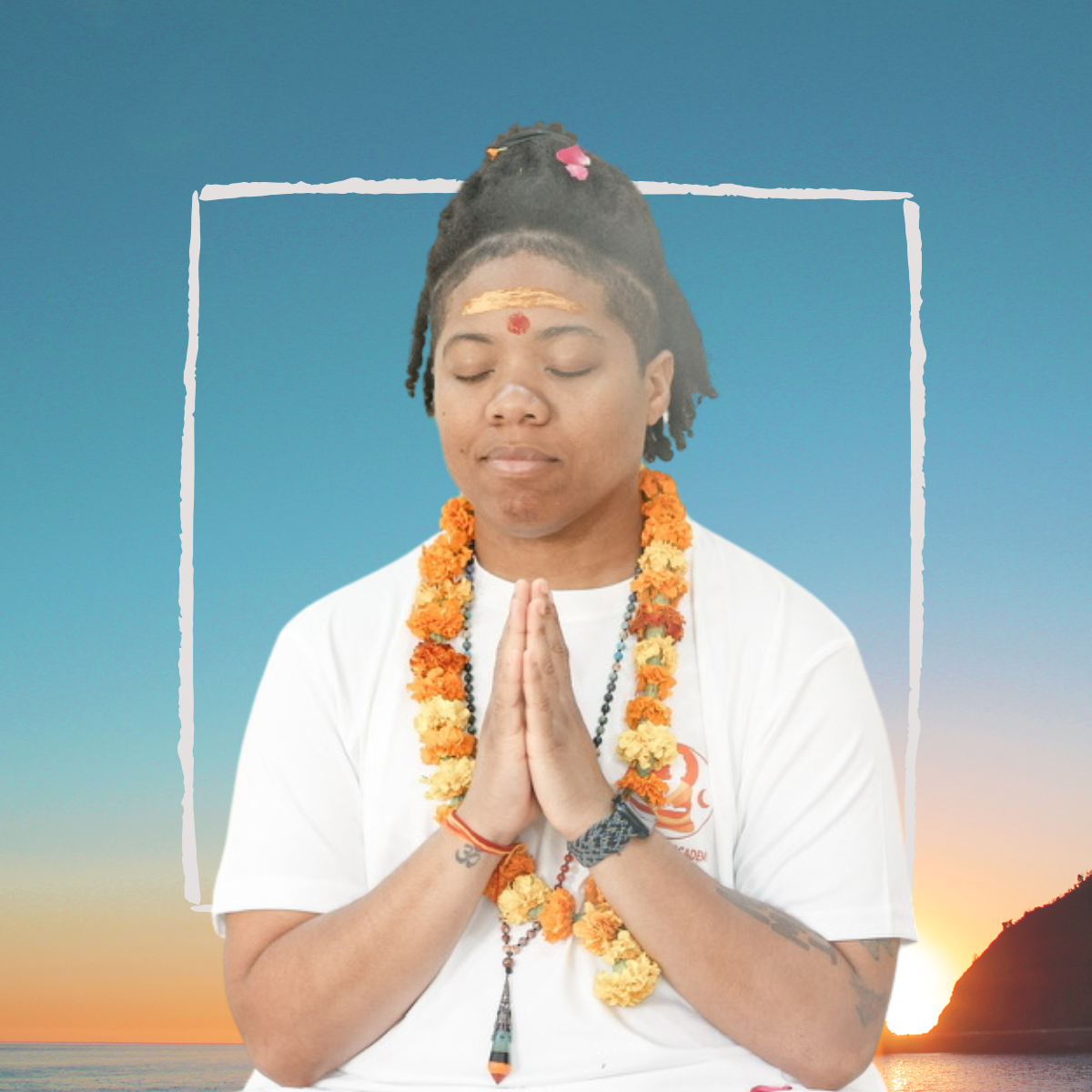
High performance was never the issue.
The nervous system underneath it was.
The modern high achiever has more tools, more information, and more access than any generation before them. And yet burnout, anxiety, and disconnection keep showing up in the very people who "should" have it figured out.
The problem is not lack of ambition, discipline, or strategy. The problem is that the nervous system underneath all of that ambition was never updated to match the demands being placed on it.
When your nervous system is chronically dysregulated, it does not matter how sophisticated your productivity system is. You will keep hitting the same ceiling: decision fatigue, emotional reactivity, broken sleep, strained relationships, creative blocks, and a quiet but persistent sense that something important is missing.
Dysregulation
When your nervous system is stuck in fight-or-flight, it's harder to reach the clear thinking, creativity, and empathy that long-term vision needs.
Isolation
Many high achievers feel deeply alone at the top. Without genuine co-regulation, the steadying effect of safe human presence, the nervous system struggles to fully reset.
Confusion
Without a clear, personalized roadmap, high achievers default to adding more — more habits, more hacks, more information — on top of an already overloaded system.
Regulate — Stabilize Your System
The foundation of every other upgrade you want to make begins here. Before you can architect a better life, your nervous system needs to know it is safe enough to do so.
Regulation is not relaxation. It is the physiological state in which your system can move out of survival mode — where fight-or-flight is no longer the default — and into a state of presence, openness, and capacity.
In Phase 1, we use breath, body awareness, and somatic cues to interrupt the chronic stress loop that most high achievers don't even realize they're in. The goal is not to be calmer. It is to expand your window of tolerance — the range within which you can hold intensity without losing your center.
What changes in Phase 1:
- →Shoulder tension, shallow breathing, and jaw clenching begin to release
- →Many people find it easier to settle at night as their system learns to shift gears
- →Emotional reactivity softens — you pause before you respond
- →A felt sense of groundedness that isn't dependent on external conditions
Reclaim — Architect Your Lifestyle
Once your nervous system has experienced what regulation feels like, the next question becomes: what kind of life do you actually want to build?
Phase 2 is where the design work begins. You stop reacting to your life and start architecting it. This is where awareness deepens into structure — where the insight from Phase 1 becomes a real structure for how you move through your day, your relationships, and your work.
Reclaiming is not about adding more to your schedule. It is about redesigning the structure of your energy so that what you give your time to actually reflects what matters most to you.
What changes in Phase 2:
- →You move from reactive scheduling to intentional design of your days
- →Creative flow returns — ideas emerge from fullness, not pressure
- →Relationships shift as you become more present and less depleted
- →You develop the capacity to hold intensity without burning out
Rise — Grow Without Losing Yourself
This is where the work becomes a way of life. Phase 3 is not simply about achieving more — it is about becoming the kind of person who can hold more without losing themselves in it.
Rising from a regulated, intentional baseline looks fundamentally different from traditional high performance. Decisions are clearer. Relationships are deeper. Creative output expands because it is no longer competing with chronic stress for your internal bandwidth.
At this level, you are not just optimizing your own life. You are beginning to model a different way of leading — one that your team, your family, and your community can feel and be influenced by.
What changes in Phase 3:
- →Business and creative expansion from internal capacity, not grind
- →Your leadership presence becomes calming and clarifying to those around you
- →Hard days take less out of you, and rest starts to feel like rest
- →You model a way of living that makes sustainability look like success
Phase 3 Entry Points
Ecstatic Lifestyle OS
$5,000A 6-week small-group program to build regulation into every area of life.
Explore →BIG VISION
$10,000/yearOur year-round membership: every program, one community.
Explore →Retreats
ImmersiveImmersive in-person experiences for deeper reset and lasting change.
Explore →Grounded in physiology,
informed by research
The practices inside this system are not chosen for aesthetics. Every tool — the breathwork, the somatic movement, the sound frequencies, the community design — maps to specific physiological mechanisms that govern how your nervous system functions.
Polyvagal Theory
Stephen Porges's Polyvagal Theory offers a widely used framework for understanding how the vagus nerve relates to our sense of safety and connection. Researchers still debate parts of the theory, but it has shaped how many practitioners, including us, approach breath and body work.
HRV & Biometrics
Heart Rate Variability (HRV) is a common marker of how flexibly your nervous system responds to stress. Higher HRV is associated with better stress resilience and recovery, and slow, paced breathing is one of the practices research most often links to it.
Somatic Release
Somatic approaches, popularized in part by trauma researcher Bessel van der Kolk, work from the idea that stress is held in the body as well as the mind. Our movement practices help you notice and release tension patterns that thinking alone often doesn't reach.
Co-regulation
Human nervous systems are wired to regulate in the presence of other calm, grounded nervous systems. The community structure of Energy of Creation is not incidental — it is a core mechanism. Shared practice creates a field of co-regulation that supports each person's healing.
Breathwork Mechanisms
Controlled breathing patterns directly influence CO₂ and oxygen ratios, pH balance, and sympathetic/parasympathetic activity. Different breathing techniques can reliably induce states of calm focus, elevated energy, or deep relaxation — which makes breath one of the most accessible, drug-free tools for changing your state.
Sound & Frequency
Sound and rhythm can shift attention and mood, and research continues to explore how specific frequencies relate to brainwave states. We use sound to support relaxed alertness and deep rest, and we let your own experience be the measure.
Ancient wisdom.
Modern research. One coherent path.
Energy of Creation was built at the intersection of two worlds that are rarely brought together honestly: the ancient wisdom traditions that understood the body, breath, and presence as gateways to human flourishing — and the modern science that is beginning to explore what those traditions knew intuitively.
We use embodiment yoga not because it is exotic, but because centuries of practice and emerging research both point to its impact on nervous system regulation and emotional coherence. We use breathwork not as a wellness trend, but as a direct access point to the autonomic nervous system. We use sound not for atmosphere, but for its measurable effects on brainwave state.
Our philosophy can be stated simply: you are not broken, and you do not need to be fixed. Your nervous system is doing exactly what it was designed to do — respond to perceived threat with mobilization and protection. What is needed is not discipline or willpower to override it. What is needed is a consistent set of conditions that teach your system it is safe to return to regulation.
Integration over Addition
We do not add practices to an overloaded schedule. We replace the fragmented approach with a coherent system that builds on itself.
Experience First
Your felt experience is the measure. We teach you to notice what shifts in your body, your sleep, and your relationships.
Community as Medicine
Healing does not happen in isolation. The community within Energy of Creation is designed as a restorative environment — one where co-regulation is constant and connection is genuine.
Questions about the methodology
Do I need to complete the phases in order?
The phases are designed sequentially because each builds on the last — regulation creates the capacity for architecture, architecture creates the stability for scale. That said, you can enter at any phase. Our free assessment helps identify where your system needs the most support right now.
Is this therapy?
No. Energy of Creation is a guided wellness and lifestyle design system, not therapy or clinical treatment. We do not diagnose or treat mental health conditions. The practices are educational, experiential, and somatic in nature. If you are working with a therapist or mental health professional, this work is designed to complement, not replace, that support.
How is this different from meditation apps or wellness programs?
Most wellness tools address one dimension — breath, or movement, or mindset — in isolation. What makes this system different is the integration: every practice is selected for its physiological effect and sequenced to create compounding change. You are not collecting individual wellness habits; you're building a way of living that holds together.
How long does it take to see results?
Many people feel a shift during their very first practice. Deeper changes in how you sleep, respond, and relate usually build over weeks of consistent practice, and lasting change to how you live develops over months. Everyone's pace is different.
Does this work for people who aren't spiritual?
Completely. While we integrate wisdom from contemplative traditions, everything in this system is grounded in physiology and can be understood and used without any spiritual framework. Our A Course in Miracles calls are spiritual in nature and always optional.